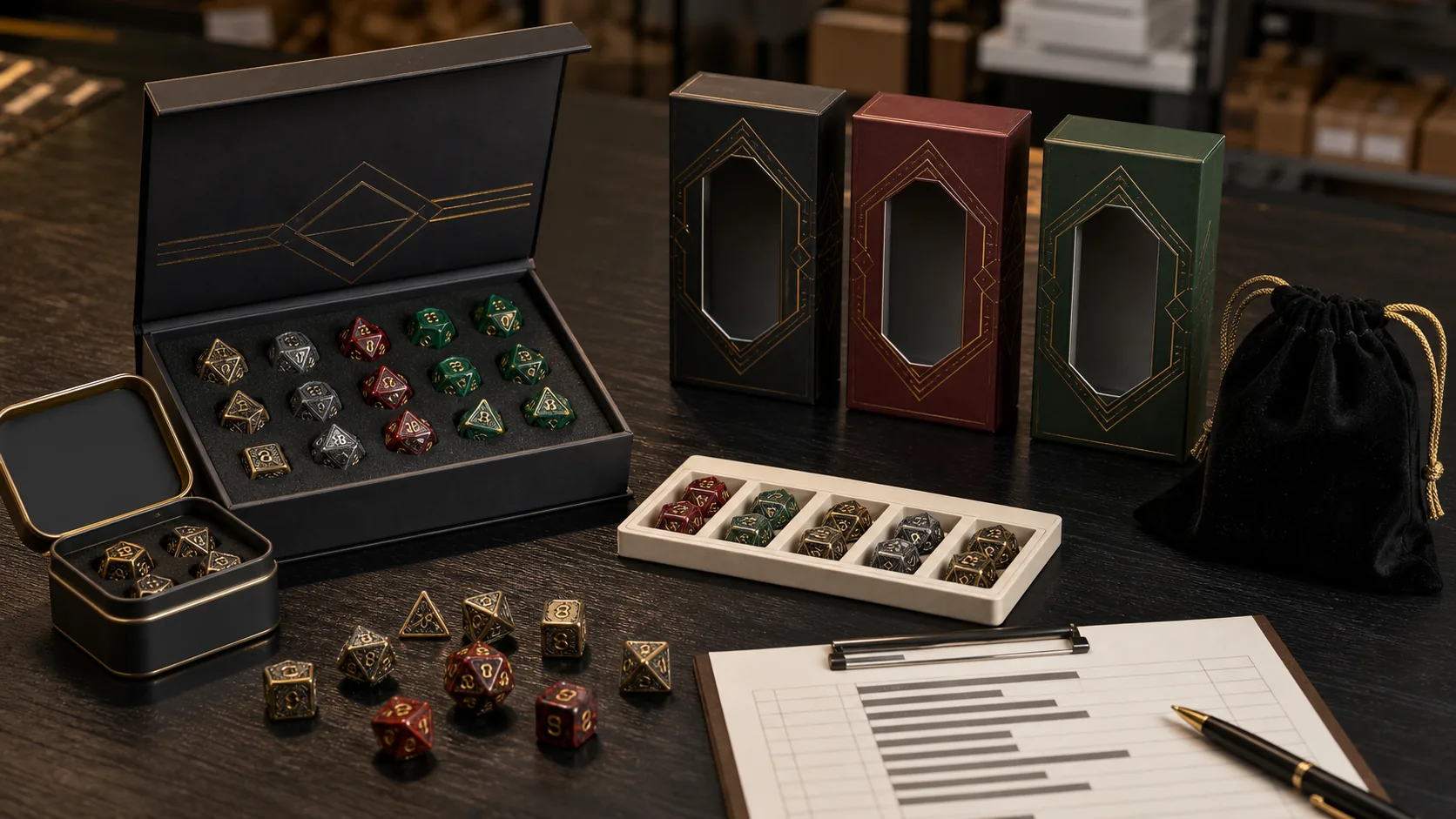
Wholesale DND dice packaging is more than a container. It determines how a customer understands the product, how a store displays it, how safely it travels, and how easily a buyer can reorder the same SKU. A standard seven-piece resin set sold at a game store may need a compact printed box or labeled bag. A premium metal dice set for a gift program may need a rigid box, fitted insert, protective finish, and enough internal space for the weight of the dice. A private label dice brand may also need a barcode, product name, insert card, logo treatment, and a repeatable packaging system across multiple themes.
That is why packaging should be specified at the beginning of a wholesale dice project. If the package is chosen after the dice are finalized, the box may not fit the d20, the insert may cover the product story, the logo may be too small to read, or the carton may be too expensive for the intended retail channel. A clear packaging brief lets the supplier evaluate the dice set, materials, artwork, MOQ, samples, and shipping assumptions together.
Wholesale DND dice packaging: the quick answer
For a first wholesale order, start with a packaging format that matches how the product will be sold. Game stores often need compact packages that can stand on a shelf, hang on a peg, or sit in a counter display. Online sellers need product photos, labels, and protection that survives parcel handling. Distributors need cartons and SKU identification that make receiving and replenishment simple. Private label brands need a visual system that can expand from one dice set into a collection.
| Buyer situation | Packaging direction | Confirm before quote |
|---|---|---|
| Game store shelf | Printed paper box, labeled bag, or compact display carton | Shelf width, hanging method, product name, and barcode |
| Counter impulse sales | Small bag, sleeve, or display tray with clear set information | Unit count, price-tier presentation, and easy staff explanation |
| Premium gift program | Tin, rigid box, magnetic box, or fitted gift set | Weight, insert protection, finish, and outer-carton strength |
| Private label dice brand | Repeatable box system with logo, insert, SKU label, and collection colors | Artwork files, print method, packaging MOQ, and reorder rules |
| Events or subscription boxes | Lightweight bag, sleeve, or custom carded pack | Pack-out speed, shipping volume, and campaign quantity |
1. Why packaging matters for a wholesale dice program
Packaging affects the buyer at three different moments: purchasing, merchandising, and reordering. During purchasing, buyers compare whether the package communicates the material, number of pieces, theme, and intended use. During merchandising, the package has to be readable from a shelf or product photo. During reordering, the buyer needs the same SKU name, artwork, quantity, and packaging specification to be easy to identify.
Good packaging also reduces the amount of explanation needed at the point of sale. A clear label can tell a customer that a pack contains a complete 7-piece polyhedral set, a bulk D20 assortment, a metal dice set, or a themed gift product. A well-designed insert can explain the theme without filling every face of the dice with decoration. This is valuable for stores with a mixed customer base, including new players who may not know the difference between a standard set, a percentile die, and a loose D20.
For B2B buyers, packaging is also part of risk control. The package should protect sharp edge resin, keep metal dice from damaging one another, prevent small pieces from escaping, and arrive with a consistent appearance. It should be checked with the actual dice rather than approved only from a screen mockup.
2. Compare wholesale DND dice packaging formats
Dice bags and pouches
Dice bags are flexible, lightweight, and useful when a buyer needs a broad assortment at an efficient packing cost. They work well for standard resin dice, seasonal themes, event rewards, and subscription programs. A bag can carry a logo tag, printed card, sticker, or hang label. The tradeoff is that the product is less visible on a shelf, and the bag usually needs a clear product label so staff and customers can identify the set quickly.
Paper boxes and folding cartons
Paper boxes are a practical choice for a game store retail shelf. They create a defined SKU, provide a front panel for the product name and logo, and can include a back panel with set contents or care notes. A folding carton is also easier to photograph consistently than a loose bag. Confirm the internal dimensions, paper weight, finish, window requirements, and whether the box is designed for a 7-piece set, a larger set, or a D20-only pack.
Tins and metal containers
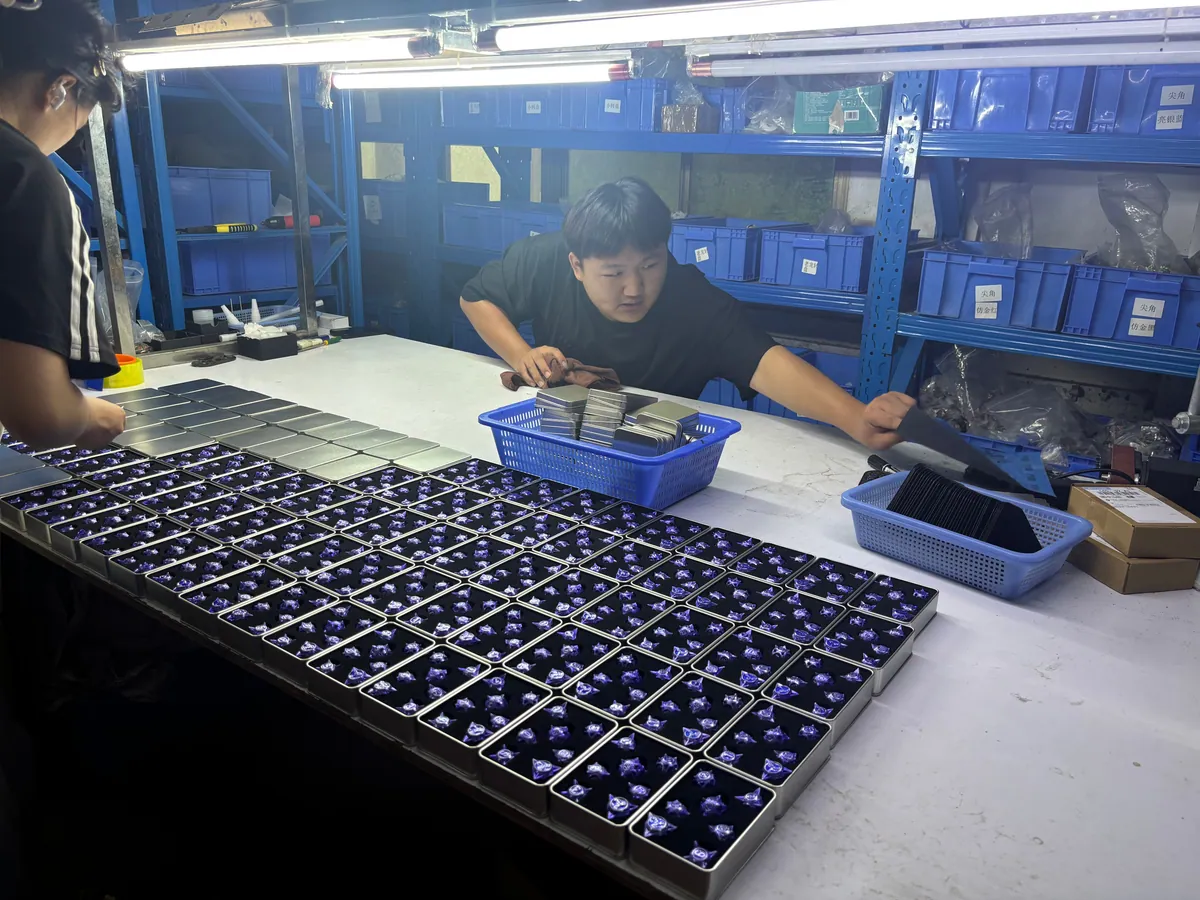
Tins add a giftable feel and can make a standard dice assortment look more durable. They are useful for collector products, convention exclusives, and private label programs with a stronger packaging story. Their extra weight and volume affect shipping, and the inside may need a pouch, tray, foam, or insert to keep the dice from moving. A tin should be tested with the actual dice finish because metal-on-metal contact can create marks during transport.
Rigid, magnetic, and premium gift boxes
Rigid and magnetic boxes support higher-end retail positioning, Kickstarter rewards, and branded gift sets. They give more room for a logo, story card, product photography, and collection identity. They also require more attention to cost, dimensions, protection, and outer-carton packing. For a premium program, approve not only the printed surface but also the hinge, magnet strength, insert fit, edge finishing, and the way the box is stacked for shipping.
Display cartons and mixed-SKU trays
A display carton can help a store present several dice sets together, especially when the buyer wants a small themed collection rather than one standalone SKU. The carton should make each product easy to remove and replace, while keeping SKU labels visible. Mixed-SKU displays should be planned carefully: if the carton contains several themes or materials, include a simple replenishment list so the store can reorder the right combination.
3. Match the package to resin, sharp edge, and metal dice
Material changes packaging requirements. Standard resin dice are generally easier to pack in bags, paper boxes, or compact cartons because the set is comparatively light. Sharp edge resin dice may need a more protective insert or a fit that prevents corners from rubbing during transit. Liquid core or oversized D20 products need internal clearance and should not be specified using the dimensions of a regular seven-piece set.
Metal dice require the most careful packaging review. Their weight can stress a thin box, and loose metal pieces can scratch each other or damage printed surfaces. A bag inside a box, a fitted tray, or a separated compartment can help protect the finish. The packaging should also be evaluated with the finished plating, coloring, and engraving because those surface treatments are part of the buyer's product promise.
Packaging should not hide the most important product information. If a buyer is selling a premium metal set, the front should communicate the material and theme. If a buyer is selling a broad resin assortment, clear colors, set contents, and a readable product name may matter more than a complex outer design. The right balance depends on the retail channel, not on decoration alone.
4. Plan logo and private label packaging details
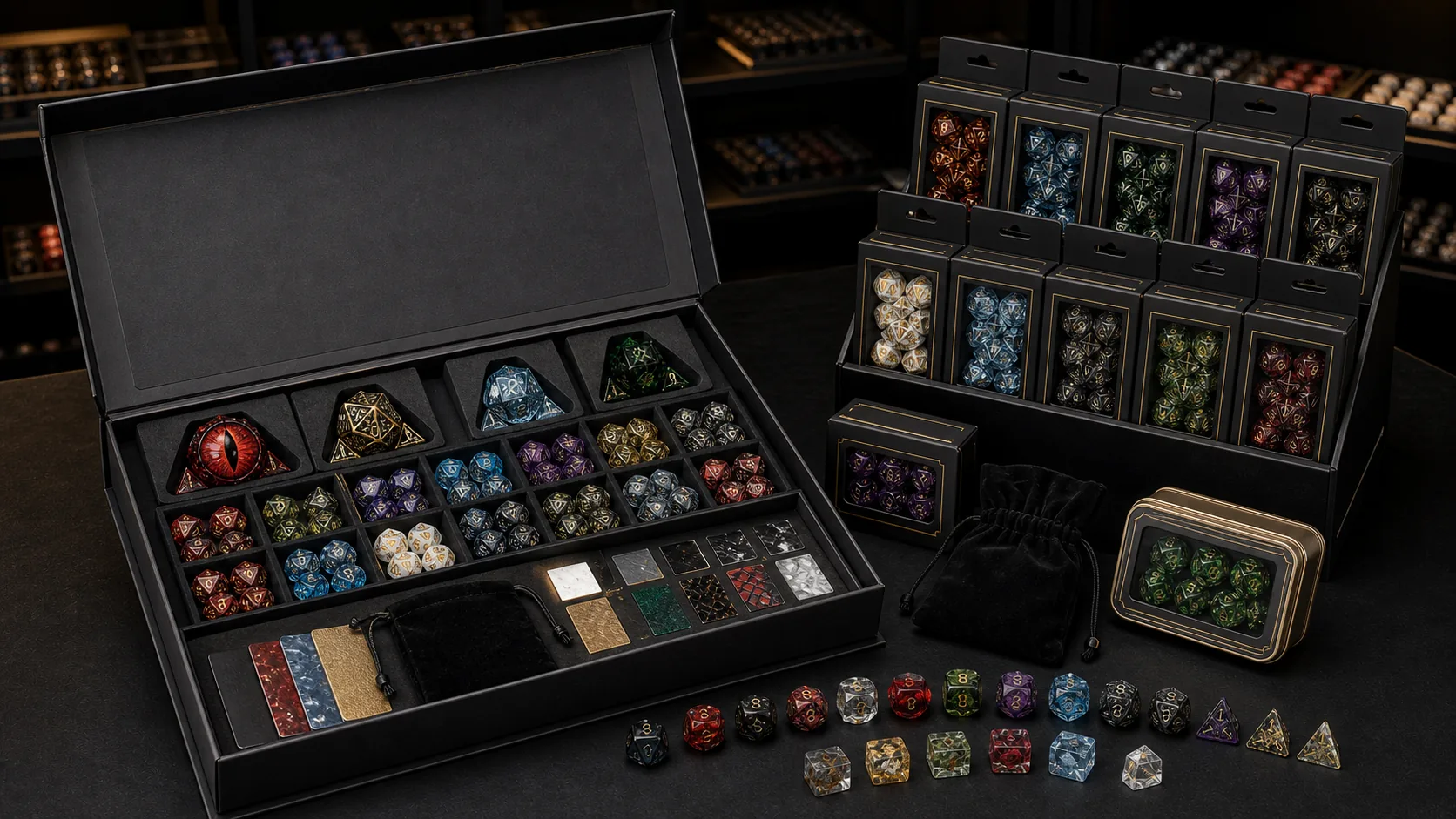
Private label dice packaging is a small brand system. The logo is only one part of it. Buyers should decide the product name, collection name, color direction, typography, barcode or SKU area, insert card, country-of-origin information where required, and the way future products will look beside the first set. Consistency makes a small dice range look intentional and helps a store reorder it.
Logo placement can be planned on the outer package, an insert card, a sticker, a fabric tag, a metal tin, or a selected dice face. A logo intended for a d20 face needs a different review from a logo printed on a box. Small internal details may disappear when reduced, and a high-contrast symbol is usually easier to read than a thin line drawing. Send vector artwork when possible and include the desired color references, but still approve a physical sample because screen colors do not show the final material in the same way.
For a collection, use packaging variations that customers can understand quickly. A shared box structure with different theme colors can work for dragon, elemental, class, or dungeon relic series. A fully different package for every SKU may look exciting but can increase setup, artwork, and inventory complexity. Buyers should decide whether the priority is a broad catalog, a premium hero product, or a repeatable private label family.
5. Plan MOQ by dice SKU and packaging SKU
MOQ is not one universal number for every project. It can be affected by dice material, mold or tooling requirements, number of colors, logo method, packaging format, print setup, insert type, and whether the same package is reused across several SKUs. A buyer should ask for the production MOQ and packaging MOQ separately, then ask what changes if several designs share a box structure or packaging artwork.
For a first order, a focused assortment is usually easier to control than a large list of unrelated products. Choose a small number of themes, a clear material tier, and one or two packaging formats. This makes the sample review more useful and gives the sales team a clearer story to explain. Once the first products have reorder data, the buyer can add colors, new themes, premium materials, or seasonal packaging with more confidence.
| MOQ question | Why it matters | What to send |
|---|---|---|
| Is MOQ per design or total order? | Determines whether a buyer can mix themes or must commit to each SKU separately. | Selected SKU list and quantity by design. |
| Is packaging MOQ separate? | Prevents a box or tin requirement from changing the production plan late. | Packaging format, dimensions, and print quantity. |
| Can one package serve several sets? | Shared packaging can simplify a small private label collection. | Collection colors, product names, and insert needs. |
| What is the reorder rule? | A first order is easier to scale when repeat SKUs are documented. | Expected reorder frequency and target markets. |
6. Approve a sample before bulk production
A sample kit should be treated as a buying tool, not just a free product selection. Review the dice and package together. Check whether the dice fit without pressure, whether the package closes correctly, whether sharp corners rub against the inner surface, and whether the product can be removed without damaging the package. For metal dice, shake the packed set gently and inspect the finish after handling. For resin dice, check number readability and whether inclusions or color effects remain visible in the package.
Review the printed details at the distance where a shopper will see them. Can the product name be read on a crowded shelf? Is the logo visible in a product photo? Does the insert explain the set contents without using claims that the product cannot support? If the package uses a barcode or SKU label, verify the code area, contrast, and placement before printing a larger run.
Ask for the final sample or an approval sample after artwork and packaging changes are incorporated. A digital mockup is useful for discussing layout, but it does not confirm fit, surface texture, print color, weight, or transport protection. Buyers can request a wholesale catalog and sample kit and include their preferred package format in the inquiry.
7. Design for the retail shelf and the product page
A package has to work in physical retail and online resale. For a physical shelf, consider whether the package stands upright, hangs from a peg, fits the store's shelf depth, and gives enough contrast against neighboring products. For an online product page, use a clear front image, a secondary image showing the open package, and a detail image showing the dice numbers, logo, insert, or tray. Consistent photography helps a buyer compare several SKUs without guessing.
Product naming should be systematic. A useful name can combine theme, material, set format, and packaging style, such as “Frost Dragon Resin 7-Piece Set” or “Custom Metal D20 Gift Tin.” This is clearer than an internal creative name that does not tell the buyer what is inside. The same name should appear on the catalog, quotation, packaging artwork, carton label, and reorder record.
If the store plans seasonal drops, keep the package structure stable where possible and change only the theme art, label, or insert. That creates variety without making every product a completely new packaging project. Buyers can review existing custom dice packaging options and compare them with the store's display requirements.
8. Wholesale DND dice packaging quote checklist
A useful quote request should give the supplier enough information to evaluate the whole product, not only the outer box. Send the following details:
- Buyer type: game store, distributor, dice brand, RPG publisher, Kickstarter creator, subscription box, or event organizer.
- Dice format: 7-piece polyhedral set, bulk D20, oversized D20, metal set, sharp edge resin set, liquid core set, or another format.
- Material and finish: standard resin, sharp edge resin, metal, plating, coloring, engraving, or mixed program.
- Quantity by SKU, expected first order, and likely reorder plan.
- Packaging preference: bag, paper box, tin, rigid box, magnetic box, display carton, gift set, or private label program.
- Logo and artwork: vector logo, symbol, color references, insert copy, barcode area, and any reference images.
- Delivery country, target launch date, shipping assumptions, and whether the product will be sold online, in stores, at events, or in a subscription box.
When the buyer provides this information, the supplier can recommend a realistic sample path and identify the parts of the order that may have separate MOQ or setup requirements. Start with the wholesale dice catalogs if you need SKU references, then send the selected codes with the packaging brief.
Wholesale DND dice packaging FAQ
What is the best packaging for wholesale DND dice?
The best format depends on the sales channel. Bags are efficient for broad assortments, paper boxes create a clean retail SKU, tins suit giftable sets, and premium boxes support private label or collector programs. Confirm the product size, display method, target buyer, and shipping needs before choosing.
Can wholesale DND dice packaging include a logo?
Yes. Logo placement can be planned on the outer box, tin, bag, insert card, sticker, barcode label, or selected dice face. Artwork, print method, color count, packaging material, and approval samples should be confirmed before production.
Does custom dice packaging have a separate MOQ?
Packaging can have its own quantity, artwork, and setup requirements. The final MOQ is usually evaluated by dice SKU, material, packaging format, print specification, and whether the packaging is reused across several products. Ask for the dice MOQ and packaging MOQ separately.
Should I request a sample kit before ordering private label dice?
Yes. A sample kit lets buyers review number readability, material finish, box fit, insert placement, logo scale, shelf appearance, and packing protection before committing to a larger order.
What information should I send for a packaging quote?
Send the dice type and quantity, packaging format, dimensions or reference images, logo files, insert requirements, barcode or label needs, destination country, target launch date, and whether the project is standard wholesale, private label, or a retail gift program.
Move from packaging research to a practical sourcing plan.
Custom DND Dice Materials and MOQ
Compare resin, sharp edge resin, metal dice, logo faces, packaging, samples, and MOQ decisions.
Bulk DND Dice for Game Stores
Plan SKU mix, sample kits, retail packaging, and reorder-ready wholesale assortments.
Custom Dice Packaging Options
Review packaging directions for private label dice, gift sets, retail programs, and custom projects.
Wholesale Dice Catalogs
Browse resin, metal, hollow, and exotic dice catalogs before sending your SKU list.
Catalog and Sample Kit Request
Request catalog references and explain your packaging, quantity, market, and delivery needs.
Factory and Production Process
See how custom metal and resin dice move through production, finishing, inspection, and packaging.
Plan a wholesale dice package that is ready for shelves and reorders.
Send your selected dice SKUs, packaging direction, logo files, target quantity, delivery country, and launch date. We can recommend a sample path and quote the dice and packaging requirements together.
Final packaging checklist
Before approving a wholesale DND dice order, confirm the dice format, material, package dimensions, internal protection, logo scale, insert copy, SKU naming, barcode area, packaging MOQ, production MOQ, sample approval, outer-carton packing, delivery country, and reorder plan. A package that fits the product, communicates the product, and can be reordered consistently is more valuable than a package that only looks impressive in a digital mockup.